
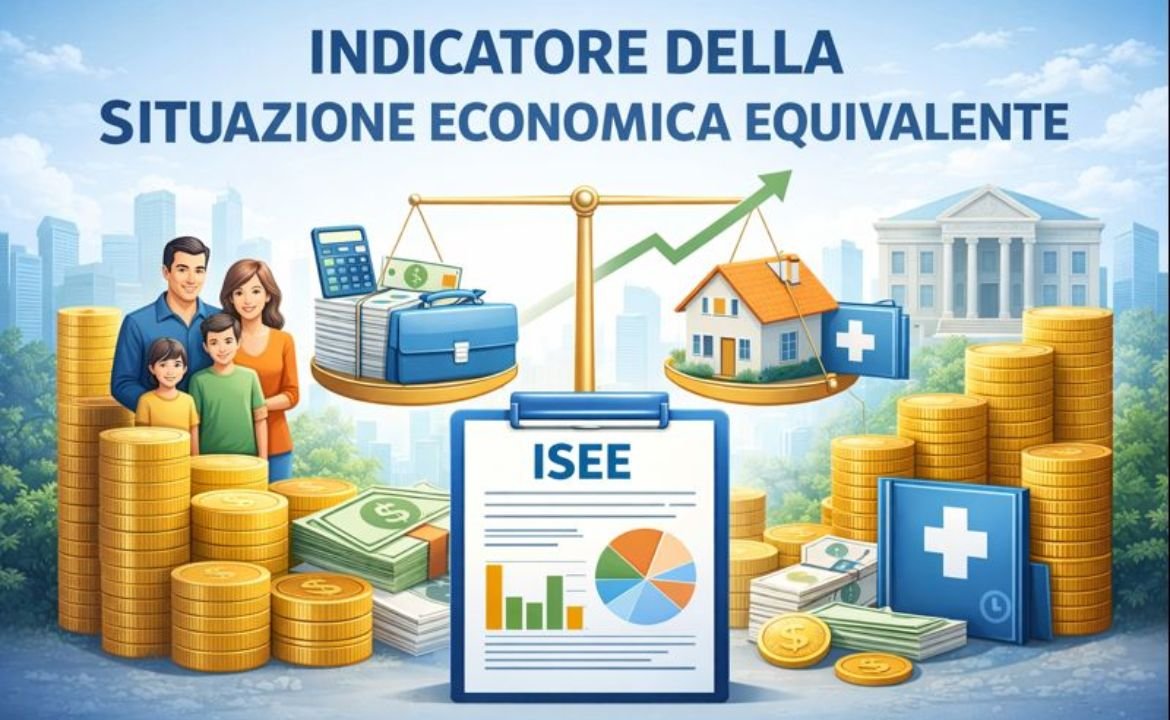
The indicatore della situazione economica equivalente is a key financial assessment tool used to evaluate a household’s economic condition. It plays a central role in determining access to social benefits, public services, and reduced fees in Italy. The indicatore della situazione economica equivalente combines income, assets, and family composition to provide a fair and standardized economic picture.
Understanding how it works helps families, students, and individuals plan better and avoid mistakes when applying for public support.
What Is the Indicatore della Situazione Economica Equivalente?
The indicatore della situazione economica equivalente, often abbreviated as ISEE, measures the overall economic strength of a household. It does not rely on income alone. Instead, it evaluates multiple financial factors together.
This system ensures that benefits are distributed based on real economic capacity rather than salary figures only. As a result, households with similar incomes but different assets may receive different outcomes.
The indicator is recalculated periodically and reflects the most recent financial data available. This makes it a dynamic and responsive economic tool.
Why the ISEE System Is Important
Ensuring Fair Access to Public Benefits
The main purpose of the ISEE framework is fairness. Public resources are limited. Authorities need a reliable way to identify who needs support the most.
By considering assets and family size, the system avoids one-dimensional evaluations. This prevents unfair advantages and ensures balanced distribution.
Supporting Social Welfare Programs
The ISEE value is used to access:
- Education subsidies
- University tuition reductions
- Healthcare benefits
- Child and family allowances
- Housing and utility support
Without this assessment, many social programs could not function effectively.
Key Components of the ISEE Calculation
Household Income
Income includes salaries, pensions, self-employment earnings, and other taxable sources. Certain non-taxable income may also be considered to ensure accuracy.
This component reflects the household’s earning capacity over a defined period.
Assets and Property
Assets include savings, investments, real estate, and financial holdings. Both movable and immovable assets are evaluated.
Primary residences are treated differently from additional properties. This adjustment helps protect basic housing needs.
Family Composition
Household size plays a major role. Larger families receive adjustments that lower the final indicator value.
Special considerations apply for:
- Children
- Disabled members
- Single-parent households
These factors ensure that economic pressure is measured realistically.
How the Equivalence Scale Works
Adjusting for Household Size
The equivalence scale modifies the final score based on the number of household members. A larger household requires more resources to maintain the same living standard.
This scale prevents unfair comparisons between single individuals and families.
Additional Adjustments
Extra coefficients may apply for:
- Young children
- Families with multiple dependents
- Members with disabilities
These adjustments reflect real-life financial needs.
Types of ISEE Assessments
Standard ISEE
This is the most common form. It applies to general services such as education support and family benefits.
It is suitable for households with stable financial situations.
Specialized ISEE
Some cases require a tailored assessment. These include:
- University students
- Healthcare assistance
- Residential care
Each version focuses on specific economic aspects relevant to the service requested.
Common Mistakes to Avoid
Incomplete Financial Information
Missing asset details or outdated income data can lead to incorrect results. This may cause benefit rejection or delays.
Accuracy is essential for a valid assessment.
Misunderstanding Household Definition
Household members are defined by legal and residential criteria. Incorrectly listing members can significantly alter the outcome.
Understanding these rules prevents unnecessary complications.
Benefits of Understanding Your ISEE Value
Better Financial Planning
Knowing your economic standing helps you plan education, healthcare, and family expenses more effectively.
It also helps set realistic expectations when applying for public aid.
Faster Application Processes
Accurate documentation reduces processing time. This ensures quicker access to services and benefits.
Prepared households face fewer administrative issues.
The Role of ISEE in Education
School and University Support
Many educational institutions rely on the ISEE value to determine tuition fees and scholarships.
Students from lower-income households benefit from reduced costs and additional assistance.
Equal Opportunities
This system promotes equal access to education by removing financial barriers. It supports social mobility and long-term growth.
Economic Transparency and Social Impact
Promoting Accountability
The ISEE framework encourages transparent reporting of income and assets. This reduces misuse of public funds.
It also builds trust between citizens and institutions.
Strengthening Social Equity
By targeting real economic needs, the system helps reduce inequality. Resources reach households that genuinely require support.
This contributes to social stability and cohesion.
Future Relevance of the ISEE Framework
Adapting to Economic Changes
As economies evolve, assessment tools must adapt. The ISEE model continues to adjust its parameters to reflect modern financial realities.
This flexibility keeps it relevant and effective.
Digital Integration
Digital systems are improving data accuracy and processing speed. This makes assessments more reliable and accessible.
Technology enhances efficiency without compromising fairness.
Conclusion
The indicatore della situazione economica equivalente is more than a financial formula. It is a structured approach to social fairness and economic evaluation. By considering income, assets, and household structure together, it provides a realistic picture of financial capacity.
