
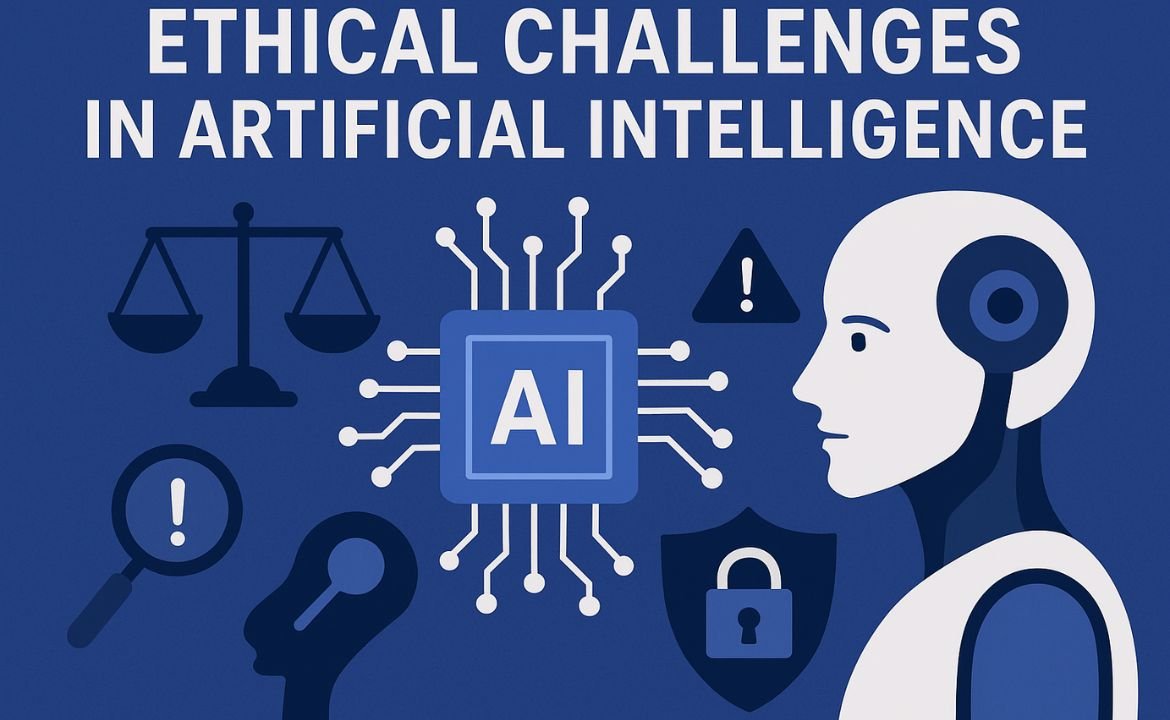
Artificial Intelligence (AI) has transformed industries, decision-making, and everyday life. However, as technology evolves, ethical challenges in artificial intelligence have become increasingly important to address. These issues arise from how AI systems are built, trained, and used across various fields. Developers, governments, and users all play a role in ensuring AI remains fair, transparent, and responsible. With growing dependence on AI, understanding these ethical dimensions is essential for building trust and accountability in digital innovation.
The Rise of Artificial Intelligence and Ethical Concerns
AI now influences healthcare, education, finance, and even law enforcement. Its ability to analyze large datasets and predict outcomes has made it indispensable. Yet, this same capability raises concerns about privacy, fairness, and control. One major ethical dilemma revolves around data privacy. AI systems learn from vast amounts of user data, often without clear consent. This raises questions about how personal information is collected, used, and stored.
Another issue is algorithmic bias. AI models can unintentionally inherit the prejudices present in their training data. As a result, biased algorithms may lead to unfair decisions in hiring, lending, or policing. Such scenarios not only harm individuals but also reduce trust in technology. Ethical challenges in artificial intelligence highlight the need for transparent algorithms and human oversight.
Accountability and Responsibility in AI Development
Determining who is accountable for AI’s decisions remains one of the biggest ethical puzzles. When an autonomous system makes a mistake—such as a self-driving car causing an accident—responsibility becomes blurred. Should developers, manufacturers, or users be held liable? This question underscores the importance of ethical accountability in AI.
Developers must design systems that align with human values. This includes incorporating fairness, safety, and explainability into algorithms. Businesses adopting AI also bear responsibility for ensuring compliance with ethical guidelines. They must perform regular audits to detect and correct any potential harm caused by their technology.
At the same time, governments and policymakers play a vital role. Establishing regulatory frameworks helps guide how AI is used in sensitive sectors. Ethical challenges in artificial intelligence can only be addressed through collaboration among industry experts, lawmakers, and researchers.
The Issue of Transparency and Explainability
Transparency is essential for trust in AI. Users should understand how AI makes decisions that affect their lives. Unfortunately, many AI systems, especially deep learning models, operate as “black boxes.” Their internal processes are often too complex for humans to interpret. This lack of explainability can lead to distrust and misuse.
Explainable AI (XAI) seeks to address this issue by making algorithms more understandable. When users can see why an AI system made a particular decision, they can better evaluate its fairness and reliability. Ethical challenges in artificial intelligence, therefore, include ensuring systems are not only accurate but also interpretable.
In fields like healthcare and finance, explainability is critical. Doctors must understand AI-generated diagnoses, and financial institutions must explain automated lending decisions. This transparency builds confidence and reduces the risks associated with opaque decision-making.
Privacy and Data Protection in AI Systems
AI relies heavily on data, and the ethical handling of that data is a central concern. Protecting user privacy is crucial, especially when AI applications involve sensitive information such as medical records or biometric data. Misuse or unauthorized access can lead to serious harm.
Ethical AI demands strict data protection measures—including anonymization, encryption, and user consent. Organizations must clearly communicate how data is collected and for what purpose. Moreover, AI developers should ensure that datasets are diverse and inclusive to prevent bias.
Another dimension of this challenge is surveillance technology. Facial recognition, for example, has sparked debate due to its potential for misuse by authorities or corporations. While it offers convenience and security, it can also threaten civil liberties if used without proper regulation. These are among the pressing ethical challenges in artificial intelligence that society must address proactively.
The Future of Ethical AI Practices
To build a sustainable future for AI, ethical principles must guide innovation from the start. Organizations should integrate ethical design frameworks into every stage of AI development—from data collection to deployment. This ensures technology serves humanity rather than exploits it.
Education and awareness are also essential. Training developers and users to recognize ethical risks helps prevent misuse. Interdisciplinary collaboration—between technologists, ethicists, and policymakers—will lead to more balanced outcomes.
Moreover, AI ethics committees and internal audits can help identify potential issues early. These measures promote transparency, fairness, and inclusivity. As AI continues to shape our world, maintaining this ethical balance becomes not just a goal but a necessity.
The most successful AI systems of the future will not only be intelligent but also ethical, transparent, and socially responsible.
Conclusion
Addressing the ethical challenges in artificial intelligence requires a united effort from developers, businesses, and governments. The key lies in creating AI that enhances human capabilities while respecting moral boundaries. By prioritizing fairness, accountability, transparency, and privacy, we can ensure that AI technology benefits society as a whole.
